by Dean | Feb 13, 2014 | General

Cover of Chasing Papi
What a debacle Linda Mendoza’s Latino-dominated Chasing Papi (2003) is! I wish Christian singer Jaci Velasquez, one of the stars here, could have been cast in a well-done screen musical with an intelligent director to work on her acting, instead of in this sloppy, stereotypical, insufficiently funny comedy. Mendoza’s idea of wit is to have a toothsome but brainy young woman coo to her boyfriend, “The basis of our relationship is intellectual.” Right.
by Dean | Feb 11, 2014 | General
In the early 60s Frank Meyer, a conservative, pointed out a number of good things that classical liberalism (different from contemporary liberalism) blessedly developed for the West, among them the belief in “limited state power” and “the free-market economy.” But he also told us classical liberalism “sapped, by its utilitarianism, the foundations of belief in an organic moral order.” That is, it settled for utilitarianism and that’s it. “An organic moral order?” a lot of folks would have said. “Is there such a thing?”
Of course this is still with us. Everything from Medicaid to the granting of amnesty to masses of illegal immigrants to same-sex marriage serves a utilitarian purpose. These things are supposed to have utility, they are supposed to work. I am obliged to mention, however, that every year approximately 70 billion dollars of Medicaid and Medicare funds are lost to fraud and improper payments. Which means every year 70 billion dollars are being poured into a rathole, an abyss, and shan’t be recovered. Can this be described as something that works?
Naturally this is Meyer’s follow-up statement: “But the only possible basis of respect for the integrity of the individual person and for the overriding value of his freedom is belief in an organic moral order.”

Frank Meyer (Photo credit: Wikipedia)
by Dean | Feb 9, 2014 | General
So far Jason Reitman’s only failure has been Young Adult. His new movie version of Labor Day (2014), the Joyce Maynard novel (reviewed on this site), is a winner.
I’ve written that the novel is “endlessly compelling on the subject of isolation.” That is not quite the case with the film, but no matter. It is gripping and touching when concentrating on a woman’s two miscarriages and one stillbirth (those of Kate Winslet’s Adele). Maynard’s plot is faithfully rendered and the film has plenty of heart. The acting is usually satisfying, although young Gattlin Griffith, as the boy Henry, invariably wears the same facial expression. Josh Brolin’s performance as the convict is mainly lived-in but slightly dull. Better are Brooke Smith (Evelyn), who has verve, and young Brighid Fleming (Eleanor), who is coolly true as a girl contentedly aware of her slowly growing sophistication. As for Winslet, she is movingly delicate, savvily good.
Labor Day was made in a felt, subdued manner, and its titles sequence is a wonder of editing. You won’t have a problem with Eric Steelberg’s cinematography either.
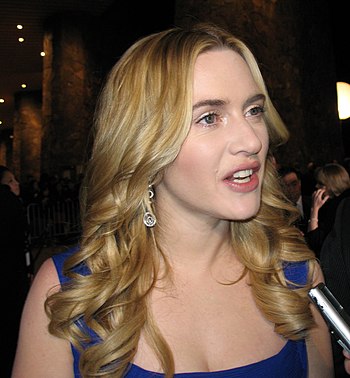
English: English actress Kate Winslet. Español: Actriz inglesa Kate Winslet. Português: Atriz inglesa Kate Winslet. (Photo credit: Wikipedia)
by Dean | Feb 6, 2014 | General
A school bus has skidded off a hillside and fourteen children, residents of a Canadian town called Sam Dent, have died in Atom Egoyan’s The Sweet Hereafter (1997), this being the horrific incident the movie revolves around.
I don’t know about the Russell Banks book that Hereafter is based on, but what the acclaimed film is about is the impairment of family and community—an impairment caused not only by the loss of the children but also, appallingly, by the evil deeds of incest and adultery. Moreover, the opus concerns the necessity of moving on (in various ways) after a catastrophe, even the compulsion to change a mistaken or unworthy course in order to avoid further damage.
Intelligently paced and edited, the film is moving, bold and far from slapdash. Among the actors, Ian Holm, Gabrielle Rose, Alberta Watson, Bruce Greenwood and others do everything possible to deepen the action.

Cover via Amazon
by Dean | Jan 30, 2014 | General
A Joyce Maynard novel based on a true story about a woman who persuaded her teen lover and his friends to murder her husband became, in 1995, a good film adaptation titled To Die For, with direction by Gus Van Sant and a screenplay by Buck Henry. Here, the murder of a husband occurs but differs from life in that there exists the lure of the trivial and the brummagem (or does it differ from what went on in life?)—i.e., becoming a professional Television Personality. This is what Suzanne Stone is consummately ambitious for; she loves the thought of being on television more than anything else, including her affectionate and humble husband. He wants children, she doesn’t because of her career, and since she begins to see him as a hindrance, she coaxes a teenage boy into sex and then murder. As well, she agrees to pay the boy’s helper, another teenager, a thousand dollars and some CDs for his part in the murder, but never comes through. She spurns her adolescent partners after the dirty deed is done, completely apathetic to her crime.
Some of Henry’s humor here is unfunny, but the sardonicism has a way of winning us over and the film never shrinks from facing the sheer iniquity of Suzanne’s doings. Along with assailing the media, it hammers one nail after another into the murderess’s coffin. It insists on justice, not mercy. But it does this, I might add, sans a trace of sanctimony or misogyny.
Nicole Kidman is poised and, playing an airhead, amusing as Suzanne, and is neither actorish nor by-the-numbers. Van Sant provides dazzle but knows how to restrain himself in his direction, and Danny Elfman’s biting, mercurial music is one of the film’s best features.

Cover of To Die For