by Dean | Oct 15, 2013 | General
Despite a few clinkers, the 1960s were a good decade for cinematic Westerns. March of ’60 saw the last Randolph Scott picture Bud Boetticher directed: the 75-minute Comanche Station. Ride the High Country or True Grit it ain’t—it’s minor—but still has a lot going for it.
An original screenplay by Burt Kennedy has Jefferson Cody (Scott) trading with Comanches for a captive white woman. Indian aggression at a stagecoach station forces Cody to escort the woman (Nancy Gates) to her home, but they’re in the company of three crooks, interested in reward money for the damsel’s return.
A likable Western, Boetticher’s film tries to resist banality (up to a point). It’s a pleasant-looking work with a truly lovely actress in Miss Gates and some veritable (because nudity-free) sensuality. Further, it has an imaginative score by Mischa Bakaleinikoff.

English: Nancy Gates in Comanche Station (1960) (Photo credit: Wikipedia)
by Dean | Oct 13, 2013 | General
Nicole Holofcener has a new movie out—Enough Said (2013)—and again she has nothing to say about politics (or religion) and everything to say about human relationships and the undesirable behavior therein. Good for her.
Critic Joe Morgenstern is right: Eva, the main character, is a needy middle-aged woman who faces an empty life. This is precisely why she is practically displacing her daughter, about to go off to college, with her daughter’s best friend, and why she becomes so anxious to know whether what is being said about the man who starts courting her is the truth (Enough said!). The person doing the talking is the man’s ex-wife, and the man—her new beau—is overweight Albert. That Eva is ignorant about the nature of love, the love she will be expected to show, is a significant subject in the film.
Like her other pictures, Holofcener’s current effort is an intelligent comedy. Julia-Louis Dreyfus, as Eva, was born to play this character, and the late James Gandolfini is soothingly true and sympathetic as Albert. The film is poignant, with far-from-stale dialogue:
Eva: “I’m tired of being funny.” (Funny in what sense? we wonder.)
Albert: “So am I.”
Eva, after a pause: “But you’re not funny.”
Slightly thought-provoking, this is not everyday dialogue. Holofcener wants to make movies for the ages. That may well happen with some of them, Enough Said included.
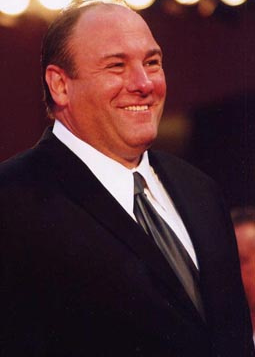
James Gandolfini (Photo credit: Wikipedia)
by Dean | Oct 11, 2013 | General
The Agnieszka Holland film, In Darkness (2012), from Poland, relates the true story of a Polish sewer worker and the few Jews he hides from the Nazis in the city sewers. Coarse and initially unprincipled, the sewer worker later turns compassionate and solicitous. Of course the bulk of the film’s sympathy goes to the Jews, but they too are pronouncedly flawed. They can be selfish, disloyal and ungrateful. Meanwhile the Polish collaborators with the Germans—as well as the Germans themselves—are stunningly vile.
Familiar in certain ways, gratifyingly fresh in others, this perfectly made movie is a masterwork of period realism.
(In Polish, etc., with English subtitles)

Agnieszka Holland. (Photo credit: Wikipedia)
by Dean | Oct 6, 2013 | General
The Phil Spector in the HBO film, Phil Spector (2013), written and directed by David Mamet, is probably not guilty of even second-degree murder. Mamet, indeed, has clearly conveyed that his film is NOT “based on a true story”—period. Spector here is a rich, drugged-out freak whom people want to be undisciplined enough to have taken the life of the hapless Lana Clarkson. Mamet produces the implication that a society in which Ted Kennedy can get away with causing the drowning death of a young woman is just as easily one in which an offensive but innocent-of-murder eccentric can get hanged.
As ever, the artist’s dialogue impresses. It’s intelligent and so is the direction. Phil Spector is a good movie and Al Pacino, as Spector, is a great actor. A remarkable Helen Mirren plays the record producer’s defense attorney, giving the character saltiness and smarts.
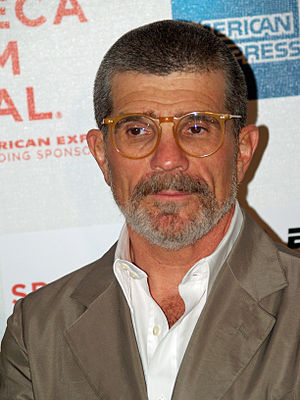
David Mamet at the premiere of Red Belt at the 2008 Tribeca Film Festival. (Photo credit: Wikipedia)
by Dean | Oct 1, 2013 | General
On The Endurance: Shackleton’s Legendary Antarctic Expedition (2001):
It was in the early modern age—1914—that Sir Ernest Shackleton sailed from London with his 28-member crew with the goal of trekking across Antarctica. They were not the first group of men never to have made it there. An earlier group were said to have lost their sanity; like Shackleton’s men, they were long stuck—or, rather, their ship was long stuck—in a monstrous icepack in the middle of the ocean. Shackleton and Co. were there for ten months before shifting ice devastated their seacraft and forced them to abandon ship, after which they started drifting on the icepack. The name of the destroyed ship was Endurance; George Butler’s dandy documentary makes it clear that the men could have been called the Endurance Team. Except “endurance” is too mild a word for what these guys exhibited during their faraway nightmarish hardships. Shackleton’s only goal now was to return all of his men to civilization alive. Could he do it?
An offbeat item: Shackleton and four other gents, after sailing in a lifeboat to South Georgia Island, learn they must travel on foot through the uncharted island to get to a whaling station. Along the way they sense there is an extra person, or presence, with them, and an interviewed relative opines that this must have been “the Man Upstairs.”
The look of Butler’s film is marvelous. . . Vintage movie footage and photographs by one of the crew’s members, Frank Hurley, are instructively memorable. Interviews with descendants and a polar historian contribute neither too much nor too little. They hold us—and Liam Neeson’s narration is good. Hail to the makers of The Endurance, one of the most riveting docs I’ve seen, and a family film to boot.

English: Sir Ernest Shackleton taken during the Imperial Trans-Antarctic Expedition (Endurance expedition) (Photo credit: Wikipedia)
by Dean | Sep 29, 2013 | General
The men and women in Prisoners (2013) are mostly either lunatics or idiots—in the case of Keller Dover (Hugh Jackman), a thoroughgoing idiot. Dover is a blue-collar fellow who, after his young daughter is abducted, just KNOWS that the culprit is Paul Dano’s simpleminded, nearly mute Alex Jones and so he takes him to an abandoned house and, to get him to talk, starts torturing him. To be sure, Alex is a suspect but Dover abuses him ad infinitum, and the whole thing is simply stupid.
A police detective acted by Jake Gyllenhaal finds another suspect—one who runs from the detective when he doesn’t have to—and now it’s time for the movie’s lunatics to show their true crazy colors. Man!
That abandoned house, by the way, used to belong to Dover’s parents and Dover inherited it. Why has he allowed it to become an unspeakable wreck?
Directed by Denis Villeneuve, Prisoners is a dismal thriller—suspenseful, yes, but still dismal—and an intellectual disgrace.

JakeGyllenhaalcropped (Photo credit: Wikipedia)