by Dean | Jun 9, 2013 | General
M. Night Shyamalan’s Unbreakable (2000) begins auspiciously but eventually self-destructs.
It raises the question of whether a middle-aged security guard (Bruce Willis) possesses comic-book hero superpowers. A physically fragile, slightly annoying black man (Samuel L. Jackson) believes he does. Who this black man turns out to be—well, in truth I can’t make head or tail of who he turns out to be—constitutes one of the movie’s bothersome flaws. Shyamalan is fond of bizarre twists but he fumbles them, as witness his The Sixth Sense. The final beyond-the-grave stuff in that picture doesn’t come off, and neither does the Unbreakable wrap-up. Inspired camera use arises in our man’s thrillers, but this is certainly no Hitchcock fare.

Cover of Unbreakable (Two-Disc Vista Series)
by Dean | Jun 6, 2013 | General
In 1971’s Straw Dogs, a Sam Peckinpah film, a fearful, reluctant man must prove he is a man by battling macho fools. The man is David (Dustin Hoffman), an American mathematician who moves to a Cornish village with his English wife Amy (Susan George). There, hayseed barbarians subtly disdain David before turning to viciousness and, against Amy, rape. . . Though riveting, the film is rather incompetently written and sometimes technically clunky. Sometimes, I say. At other times Peckinpah directs brilliantly (and uses three editors), as in the scene where David sits in his car and observes the sudden slapping of the “village idiot’s” face. Or when the church social is presented with utter ominousness as the cross-cutting goes hell-for-leather.
The rape scene is actually a rape-and-sodomy scene—shown in the X-rated DVD version—and it’s unsettling.
I don’t really consider Straw Dogs a success, but Peckinpah was gifted and, unless you’re offended by Susan George’s bare bosom, I don’t wish to dissuade anyone from seeing the film.

Cover of Straw Dogs
by Dean | Jun 4, 2013 | General
I’ve read only a couple of Francois Mauriac’s short stories, but naturally they serve up the same Christian-Catholic vision of life we find in his many novels.
It was in a 1969 book called Voices from France that I discovered “A Christmas Tale,” an absorbing Mauriac story about two boys who patently do not grow up to be like their mothers. Jean de Blaye, the story’s most prominent character, is bullied at school—bullied because his hair resembles that of a girl. The narrator, Frontenac, befriends Jean but is quite different from him. Both boys have Christian mothers but, by and by, do not go in a Christian direction.
About Frontenac’s mother Mauriac, in this quietly poetic and deeply spiritual fiction, writes: “But He lived in her. I could not think of them separately. The breath which I felt on my hair came from her in whom the spirit of God still dwelt.”
The narrator becomes a novelist. The bullied boy, Jean, although he grows stronger and more aggressive, becomes a depraved and defeated young man. The story concerns the unexpected fates of people in a saliently strange world. That one of these fates involves the indwelling of the spirit of God betokens that this is a world of much light.
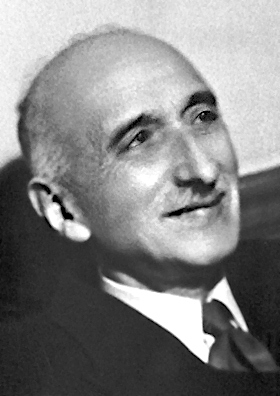
English: François Mauriac (Photo credit: Wikipedia)
by Dean | Jun 3, 2013 | General
Seabiscuit was a famous and outstanding racehorse of yesteryear. Seabiscuit the movie (2003) is, in my opinion, a superficial, pedestrian bore. So horse trainer Chris Cooper thinks would-be jockey Tobey Maguire might be able to handle feisty Seabiscuit because Maguire himself is feisty. Yeah, right.
So vexing, perhaps, is Gary Ross’s hit flick that it even induced Peter Rainer, an otherwise good critic, to write in New York magazine something very foolish, i.e. that Seabiscuit may be “the first bona fide Dubya-era movie: It exalts the haves while paying lip service to the have-nots.” The Bush presidency had its problems but, last I heard, George W. did not dismantle the welfare system. Plus he sent billions of dollars to Africa to help people with AIDs. Lip service to the have-nots?
![Cover of "Seabiscuit [HD DVD]"](http://ecx.images-amazon.com/images/I/51TF7MCAYBL._SL300_.jpg "Cover of \"Seabiscuit [HD DVD]\"")
Cover of Seabiscuit [HD DVD]
by Dean | May 24, 2013 | General
I doubt that this is Charles Dickens’ Nicholas Nickleby, but I can’t say since I’ve never read the novel. On its own, however, Douglas McGrath’s film is palatable and admirably directed. Nearly as dandy as the mature dialogue is Rachel Portman’s soothing score and Ruth Myers’s realistic costumes as all three serve the tale of a good man surrounded by shocking avarice and self-interest.
A measure of charm but not much else, I’m afraid, comes from Charlie Hunnam in the title role, and the same is true of Anne Hathaway as the girl Nicholas loves. I dislike Jim Broadbent’s crude voice in the part of schoolmaster tyrant, but he himself is convincingly wicked. Then there’s Christopher Plummer, as Nicholas’s uncle, moving from serviceable to authoritative, and Tom Courtenay is also first-rate. For the most part the cast is distinguished in this not great but good tragicomic film.
Released in 2002

Cover of Nicholas Nickleby
by Dean | May 22, 2013 | General
The French Amelie (2000), a monster hit in the country of its origin, is as offputting as it is enchanting. Winsome Audrey Tautou enacts an intensely shy, peculiar do-gooder of sorts who falls hard for a solitary fellow employed at a porn shop.
“Am I the only one who finds Amelie [the do-gooder] just a tad creepy?” asks critic Charles Taylor. No, I do too. I find the entire movie a tad creepy, for all its visual vivacity. Should we expect anything different from a film whose treatment of sex is contemptibly cheap, a romp without consequences? For one thing, even the porn shop receives a friendly nod from director Jean-Pierre Jeunet.

Cover of Amelie