by Dean | Dec 26, 2015 | General
Apropos of the 2008 book, The Believers, by Zoe Heller, who are the “believers” in this novel?
Well, Joel and Audrey Litvinoff are fervent believers in left-wing politics, as well as staunch atheists. Their daughter Rosa, like her parents an ethnic Jew, is very slowly embracing orthodox Judaism, while the couple’s other daughter, Karla, is different. She too is a left-wing believer but only because mom and dad are, and at bottom Karla believes in nothing but her own happiness. Like her father Joel before a stroke leaves him comatose, she becomes an (unlikely) adulterer.
Heller does not question the Litvinoff’s politics, although she does make the progressive Audrey an extraordinarily nasty person—and one who smokes weed. Joel, as I said, philanders. The couple’s adopted son Lenny has been a drug addict.
As surely as Karla questions her marriage, however, Heller does thoughtfully question Judaism, and yet this is a religion Rosa ultimately wants. Politics itself, the novel tells us, cannot be a religion, unable as it is to provide a sense of cosmic meaning. Cosmic belief is in our midst, and the liberal and the illiberal alike—Audrey is quite illiberal in her conduct—don’t understand it and see it as a threat. Even so, usually it is that which threatens our relationships with other people that hurts and worries us the most. The characters believe in their own happiness, but without being as limited in their vision as Karla.
If The Believers is not quite faultless, it is, I think, close to it. It is a fluidly written good read.

Cover of The Believers: A Novel
by Dean | Dec 23, 2015 | General
Of course, modern times in the 1936 Modern Times, by Charles Chaplin, means the Depression. Chaplin’s Tramp and Paulette Goddard need work, and although they find it, they unexpectedly lose it. But then find it again. The objective is to stay one step ahead of hunger. However, modern times means something else as well: that the world of industry dehumanizes workers for the sake of profit.
To bring the theme to the present, is this not what goes on today with wage theft?
The harried Tramp suffers in the satire, even being driven to a zany nervous breakdown. He recovers, though, in what is a socially conscious but hilarious and very charming comedy. Unfortunately, the film is pretty anticlimactic, but by the time the anticlimax is reached I’m tired of all the slapstick anyway. That’s how I am about slapstick. This despite my enjoyment of Modern Times, one of Chaplin’s best.
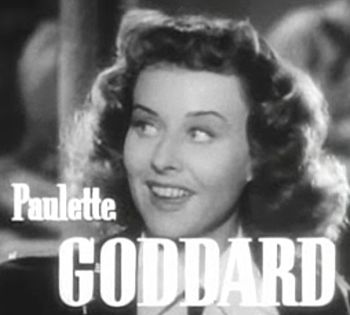
Cropped screenshot of Paulette Goddard from the trailer for the film So Proudly We Hail!. (Photo credit: Wikipedia)
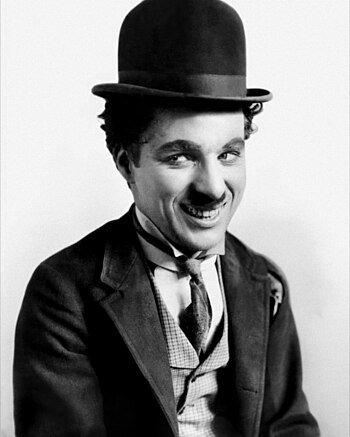
Charlie Chaplin The Tramp debuted in 1914 — pre-1923 (Photo credit: Wikipedia)
by Dean | Dec 22, 2015 | General
The first season of the Showtime series, The Affair, which I just finished watching on DVD, may get confusing up to a point; but by episode 9 it becomes a striking, affecting tragedy, not exactly common in the TV shows I’ve seen. Plus, some magnificent stuff comes from actors Dominic West, Ruth Wilson, Maura Tierney, and three or four others.
On to Season Two (when the DVD is released).
by Dean | Dec 21, 2015 | General
In 1871, a Danish immigrant (Mads Mikkelsen) kills two men who murdered his wife and his young son. One of these men is the brother of a virile fellow (Jeffrey Dean Morgan) who used to be a good man but is now cruel and wicked. He finds and brutalizes the immigrant, who thereafter seeks to avenge himself.
Critic Kyle Smith is correct that the 2015 Western, The Salvation, “relies too much on dull conventions,” notwithstanding Smith liked the film and so did I. Director Kristian Levring might have done better to adapt one of the many nifty Western novels that have been written—one without the dull conventions—but, in any case, his movie provides some not-bad action, some thrills. It is un-perversely and apolitically entertaining, not like such items as High Plains Drifter, Duck You Sucker or the p.c. Unforgiven. Yes, The Salvation saves itself.
by Dean | Dec 16, 2015 | General
The critics in 1970 were right to adamantly reject Zabriskie Point, the American-made Michaelangelo Antonioni film. It is dumb, anemic and ill-structured.
Signore Director believed the alienation of young people in the 1960s, and of the New Left, was as significant an alienation as that in such earlier Antonioni films as L’Avventura and La Notte. But ZP fails to convince us of that. It has no sophistication whatsoever. Indeed, the straightforward lovemaking between hippies in the desert (presented in a dream sequence) goes on for so long—and ends with a long shot that makes the hippies look like insects on sand banks—that it turns distasteful. Yes, visually the film is often impressive, but junk is junk.
Zabriskie Point is a free-love, essentially anti-cop movie, and so we can hardly help realizing just how right it seems for our shoddy times.

Cover of Zabriskie Point
by Dean | Dec 15, 2015 | General
The Season 2 Christmas episode of Jane the Virgin ended on an alarming note—once again our sympathy goes to Petra—but it was the “mid-season finale” so we’ll have to wait till late January to see what happens.
Alarming or not, though, there sure was a lot of whimsical stuff this time. Jane got so angry over Rafael’s deceptive ways that, yep, steam literally shot from her ears. And she kept appearing in imaginary (story) roles as she tried to write a prize-winning tale—uh, watch the episode online and you’ll understand what I mean.
Jane’s baby wasn’t featured very much this time, and that’s okay by me. Too much wild comedy went on for a tiny tot to often be on camera. Really, it was a pretty festive episode even when things were going wrong for the characters.