by Dean | Jan 8, 2014 | General
Here we go. Two gay men take a Colorado baker, Jack Phillips, to court because he declined to bake them a wedding cake. The judge rules that Phillips either prepares the cake or pays a fine, his religious beliefs be damned.
This is hardly the first time something like this has happened. Advocates for same-sex marriage demand that people violate their consciences in the interest of something the State has legalized. They are coerced into “recognizing” its “legitimacy” (the quotation marks are necessary), but nothing but the impulse to deny religious freedom is at work here.
Such advocates say to all of us, “I want you to be a Follower.” Not a Follower of God, to be sure, but a Follower of today’s ultra-egalitarianism. I say: LET’S GO TO WAR AGAINST THIS MADNESS!
by Dean | Jan 6, 2014 | General
The French director who left me disgusted with Murmur of the Heart left me satisfied with The Fire Within (the French title is Le Feu follet—“Will-o’-the-wisp”), a 1963 gem. Louis Malle, the director, outdid himself with what is an adaptation of a novel I haven’t read about a man’s unstoppable suicide.
Life seems mainly worth living in the film, but perhaps not for Alain (Maurice Ronet), a former (?) alcoholic with no money of his own and a dissatisfying marriage to an American wife living in New York. Confidently Malle delivers a world—in 1960s Versailles and Paris—of socially undamaging psychological pathology. Quiet neurosis is almost everywhere, but Alain is the only suicidal character. Yet the film induces us to ask questions. Is Alain’s situation actually hopeless? At the beginning of the movie we see him with a mistress. Maybe for a damaged man who cheats on his wife it is hopeless. Then again, does Alain’s suicide merely emanate from what seems to be an unyielding self-absorption?
The Fire Within is challenging. For me it is a trifle hard to get through since incidents in the film are scarce, but it’s an utterly mature, smartly made artwork with enjoyable Satie music on the soundtrack.
(In French with English subtitles)

Cover of The Fire Within – Criterion Collection
by Dean | Jan 3, 2014 | General
Of all the 2013 movies I saw (there are a good number I didn’t see), the best are American Hustle, The Spectacular Now, Gravity, Blue Jasmine, Populaire and probably Renoir.
Honorable mention goes to The Place Beyond the Pines, Enough Said, The Hobbit: The Desolation of Smaug, Kick-Ass 2, and World War Z.
by Dean | Jan 2, 2014 | General
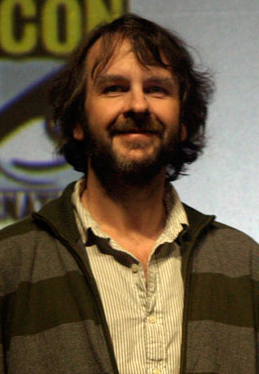
English: Peter Jackson promoting the 2009 film District 9 at San Diego Comic-Con. (Photo credit: Wikipedia)
If there are any people—I mean creatures—who have problems and struggles galore, it is the hobbit (Martin Freeman) and the dwarves inhabiting the world of The Hobbit: The Desolation of Smaug (2013). They strive and fight and run all the way to the cliffhanger ending, and the Peter Jackson serial goes on.
Granted, I couldn’t keep up with everything that happens here, but at least I knew the stakes were very high. Orcs, giant spiders and especially, a stupendous talking dragon called Smaug kept them that way. Jackson has had a very uneven career, but Smaug is an eminently watchable pop movie with Lord of the Rings visual poetry and properly built excitement.
A cramped, old-world town on a cold lake, thin blankets of spider webs in a forest, lovely vistas beyond numerous treetops—-these images and more splendidly enrich a not-so-important enterprise.
by Dean | Dec 27, 2013 | General
Inspired by the FBI’s Abscam operation of the late ’70s, American Hustle (2013), according to its own announcement after the credits, “is a work of fiction.” It is unconcerned with historical re-creation. Too, for all the focus on corruption, it is not a work of moral import, but it does do a good job of demonstrating that in life there is comedy even where there is crime: specifically, fraud. And even where there is a painful love triangle. This triangle involves two con artists (Christian Bale and Amy Adams) and the FBI agent (Bradley Cooper) who offers them impunity if they will help engineer four big-time arrests.
The characters are fun—and, better, fascinating—in this mercurial David O. Russell film as gratifyingly commercial as Russell’s previous pic, Silver Linings Playbook. Direction and editing here make for an outstandingly constructed product, and the main actors are either commandingly “natural” (Adams and Bale, in that order) or passionately credible (e.g. Jennifer Lawrence).
It may be Russell’s best movie to date. It ain’t perfect, it ain’t profound, but . . . it’s riveting. And it’s eccentric in that the women look sexy and the men, by virtue of the ’70s, look laughable.

Cover of Amy Adams