by Dean | Jun 16, 2013 | General
It’s increasingly hard for movies to be interesting. A Danish picture with a lot of English dialogue (as well as a lot of subtitles), Susanne Bier’s Love Is All You Need (2013) is wispy and largely unimaginative—in short, a yawner. Not at all is it redeemed by the southern Italy shots and the absence of sentimentality. The characters, especially the men (played by Pierce Brosnan, Kim Bodnia and others), are depicted not only in a shallow way but in a laughably, almost stupidly shallow way. The dialogue reveals so little about them you’re tempted to wonder why it even exists.
Bier has done far better than this in the recent past—with Open Hearts, for example—but it was slightly easier in the recent past to make interesting movies. I suspect audiences will not long tolerate being bored.

English: Brosnan Pierce at Cannes in 2002. (Photo credit: Wikipedia)
by Dean | Jun 14, 2013 | General
Artistically the 1973 sci-fi farce, Sleeper, is one of Woody Allen’s best films. Except for the physical comedy, it’s hilarious. Nevertheless:
Woody wants us to know 1) he is justified in his (1973) atheism, 2) sex is sort of the summum bonum in life, and 3) his movies do not always end well; sometimes the endings are flat.
In sum, I can’t say I really enjoy Sleeper.

Cover of Sleeper
by Dean | Jun 9, 2013 | General
M. Night Shyamalan’s Unbreakable (2000) begins auspiciously but eventually self-destructs.
It raises the question of whether a middle-aged security guard (Bruce Willis) possesses comic-book hero superpowers. A physically fragile, slightly annoying black man (Samuel L. Jackson) believes he does. Who this black man turns out to be—well, in truth I can’t make head or tail of who he turns out to be—constitutes one of the movie’s bothersome flaws. Shyamalan is fond of bizarre twists but he fumbles them, as witness his The Sixth Sense. The final beyond-the-grave stuff in that picture doesn’t come off, and neither does the Unbreakable wrap-up. Inspired camera use arises in our man’s thrillers, but this is certainly no Hitchcock fare.

Cover of Unbreakable (Two-Disc Vista Series)
by Dean | Jun 6, 2013 | General
In 1971’s Straw Dogs, a Sam Peckinpah film, a fearful, reluctant man must prove he is a man by battling macho fools. The man is David (Dustin Hoffman), an American mathematician who moves to a Cornish village with his English wife Amy (Susan George). There, hayseed barbarians subtly disdain David before turning to viciousness and, against Amy, rape. . . Though riveting, the film is rather incompetently written and sometimes technically clunky. Sometimes, I say. At other times Peckinpah directs brilliantly (and uses three editors), as in the scene where David sits in his car and observes the sudden slapping of the “village idiot’s” face. Or when the church social is presented with utter ominousness as the cross-cutting goes hell-for-leather.
The rape scene is actually a rape-and-sodomy scene—shown in the X-rated DVD version—and it’s unsettling.
I don’t really consider Straw Dogs a success, but Peckinpah was gifted and, unless you’re offended by Susan George’s bare bosom, I don’t wish to dissuade anyone from seeing the film.

Cover of Straw Dogs
by Dean | Jun 4, 2013 | General
I’ve read only a couple of Francois Mauriac’s short stories, but naturally they serve up the same Christian-Catholic vision of life we find in his many novels.
It was in a 1969 book called Voices from France that I discovered “A Christmas Tale,” an absorbing Mauriac story about two boys who patently do not grow up to be like their mothers. Jean de Blaye, the story’s most prominent character, is bullied at school—bullied because his hair resembles that of a girl. The narrator, Frontenac, befriends Jean but is quite different from him. Both boys have Christian mothers but, by and by, do not go in a Christian direction.
About Frontenac’s mother Mauriac, in this quietly poetic and deeply spiritual fiction, writes: “But He lived in her. I could not think of them separately. The breath which I felt on my hair came from her in whom the spirit of God still dwelt.”
The narrator becomes a novelist. The bullied boy, Jean, although he grows stronger and more aggressive, becomes a depraved and defeated young man. The story concerns the unexpected fates of people in a saliently strange world. That one of these fates involves the indwelling of the spirit of God betokens that this is a world of much light.
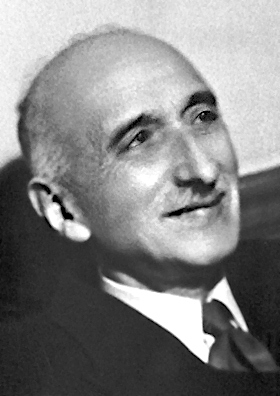
English: François Mauriac (Photo credit: Wikipedia)