by Dean | Jan 28, 2013 | General
Listening to his Cantata 140, one may well opine that Bach was a genius of a melodymaker. Melody shines throughout the choruses, duets and recitatives here, and Christian optimism pervades. Bach makes choral music happy; his art is, of course, a sanguine art.
Cantata 140 is impressively dignified too—not only in its choruses but also in, for example, the first soprano-and-bass duet. Indeed, a sense of human dignity is evoked as well as the greatness of Christ, for the worth of man exists because the worth of God exists. However, it is the cantata’s second duet (the sixth movement) that contributes to the work’s beauty more than anything else, for it is a gentle and splendidly lyrical aria. It’s no surprise it issues from the melodymaker behind “Jesu, Joy of Man’s Desiring.”
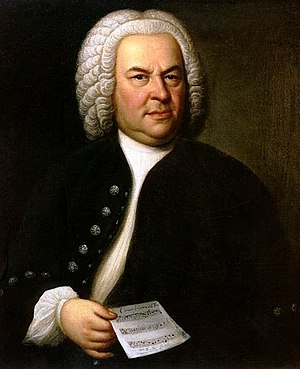
Johann Sebastian Bach (aged 61) in a portrait by Elias Gottlob Haussmann, Copy or second Version of his 1746 Canvas, private ownership of William H. Scheide, Princeton, New Jersey, USA (Photo credit: Wikipedia)
by Dean | Jan 23, 2013 | General
The tasteless and sloppy rubbish found in so many Hollywood movies is now much in evidence in TV programs. Twenty-five minutes of the Fox series, The Following, is all I could take the other night. Later episodes might be better, but I’m too disgusted to care.
The Fox network is endlessly repelling. Mariah Carey, Keith Urban and Nicki Minaj have been added to American Idol—this because it cares more about showcasing and worshipping celebrities than about hiring adequate judges for singers.

Official LOGO (Photo credit: Wikipedia)
by Dean | Jan 14, 2013 | General
Kathy is a child raised in the English boardingschool, Hailsham, before becoming a young woman played by Carey Mulligan in Never Let Me Go (2010)—and Kathy is a clone. So are the other children at Hailsham, among them Kathy’s friend Ruth and the boy she has a crush on, Tommy. Because she doesn’t want to end up alone, Ruth woos Tommy away from Kathy and later provides a mea culpa for it, since she is finally separated from her lover, anyway, by a coercive society. This is because it is determined that Ruth and the other clones will have their vital organs removed that they may benefit those who are sick and injured. They are human beings created by a society that will sacrifice them.
As does the novel by Kazuo Ishiguro, this adaptation directed by Mark Romanek recreates past decades as a fantasy world, though one which is recognizably ours. We are told that most major diseases were wiped out by 1952 and that by 1967, human life expectancy was 100. We can figure out for ourselves, however, that moral progress did not match medical progress, in what were in fact post-Hitler, post-Stalin years. It is during the 1990s that Kathy and the others must donate their organs. We are induced to ask: How is moral sanity reached? How is dehumanization in the past prevented from becoming dehumanization in the present? Why is this a world of both English boardingschools (which are generally not for clones) and evil?
“Never let me go” means never let the human individual, even if he or she is a copy, go—into death. But the human individual must go in a strange England which fails to see its postwar spiritual emptiness, its placid acceptance of horrors. It’s an acceptance slowly rising in today’s Western civilization.
Romanek’s film is superlative. It understands the importance of Ishiguro’s themes but is not too cerebral. It is never pretentious. Its tone is sure and its scene composition fine. . .
by Dean | Jan 3, 2013 | General
I like Kevin James, but I don’t like Here Comes the Boom (2012).
It’s an inspirational comedy starring and co-written by James, and, although the comedy is reasonably funny, the inspirational content is spurious and ridiculous. Sometimes I thought the movie was simply an excuse for showing a man getting pummeled in a mixed martial arts ring. That goes on before we’re pummeled by inspiration.
*
Now for a year-end list. The best films I saw in 2012 are, in no particular order: Bernie, Lincoln, Moonrise Kingdom, Damsels in Distress, Chronicle, and probably Silver Linings Playbook. Honorable mention: Atlas Shrugged Part 2 and The Avengers.
by Dean | Jan 2, 2013 | General, Movies
 David O. Russell’s first film, Spanking the Monkey (1994), is not a crowd pleaser. Mediocre as it is, it’s tougher than that. His new picture, Silver Linings Playbook (2012) is a crowd pleaser—and it isn’t mediocre. It’s a seriocomic piece that manages to be a lot of fun. Nimble with his camera, Russell adapts a novel unknown to me for what seems like a good adaptation to the silver screen (i.e. the movie stands on its own).
The story is that of a man (Bradley Cooper) just out of a mental hospital and his hopes of restoring his subverted marriage. Presently he befriends a chilly, emotionally disturbed young widow (Jennifer Lawrence) who affects his life in curious ways. The value of marriage, despite the imperfections of marriages, is a theme in Playbook. So is the understandable fight, undertaken by some individuals, to turn away from darkness, from “negativity” (oh, that word!), and concentrate on light—as well as possible.
Funny and buoyant, what we have here is a contemporary Preston Sturges movie, only more touching. Granted, it can be corny too, but I had no trouble seeing a silver overlay in Silver Linings Playbook, however un-tough it may be.
by Dean | Dec 26, 2012 | General
Clifton Adams’s The Last Days of Wolf Garnett, published in 1970, is a fine Western. It’s mostly well written, though Adams does incorrectly use “disinterested” (which means “impartial”, not “uninterested”), and it eschews becoming formulaic. Up to a point I like the Western formulas, but non-formulas are even better so long as the book is sane and entertaining.
Here, the driven Frank Gault does not believe the barbarous man who murdered Gault’s wife is dead, even though he is supposed to be buried in New Boston’s cemetery. Gault intends to avenge himself on the brute, Wolf Garnett by name, by and by encountering a terrible and dangerous conspiracy. It’s a mystery story as well as an action novel. Some startling material is here, in fact, in this a gritty portrait of obsession and the worst possible corruption.