by Dean | Nov 28, 2017 | General
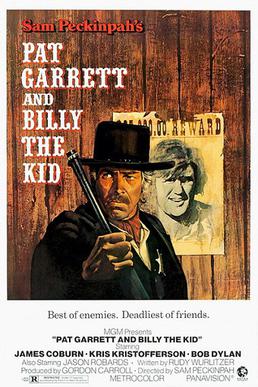
Pat Garrett and Billy the Kid (Photo credit: Wikipedia)
Flecks of disrespect toward people who profess to be Christians are found in some of Sam Peckinpah‘s movies (The Deadly Companions, Ride the High Country), and clearly Pat Garrett and Billy the Kid (1973) is no exception. (I’ll give Straw Dogs a pass; it’s different). But Christians need not be offended by Garrett: the entire film is unloved pig vomit, not to be taken seriously.
It is easy to mistake the picture for a Bob Dylan musical, with bad songs aplenty—Dylan wrote the, uh, score—but, no, it is of course a Western. This one, though, is not much enlivened by its scenes of violent action, gripping as these can be. When it isn’t ludicrous, the material is tired. The film is inert. . . As many as six film editors worked on it, with Peckinpah typically denied further control of the flick. If only screenwriter Rudy Wurlitzer had been denied any control of it.
by Dean | Nov 26, 2017 | General

Ambrotype of Fanny Brawne taken circa 1850 (photograph on glass) (Photo credit: Wikipedia)
A nice scene in Bright Star (2009), by Jane Campion, has the poet John Keats (Ben Whishaw) choosing to knock on a wall behind which is the bedroom of Fanny Brawne (Abbie Cornish), who hears the knock. Then Fanny herself, drawn to Keats, knocks back, with no other response forthcoming. Shyly neither knocks again, or tries to communicate with words. This physical separation between the two will become forced and lengthy as time goes on. A love affair develops, and Keats implacably becomes everything to Fanny; but the couple is parted for long periods of time.
Fanny—the film is more about her than about Keats—is a proud, sometimes haughty dressmaker, who is usually even-tempered and who loves her mother and siblings. And she gets to love Keats against all odds—such as John’s illness and his skeptical best friend, Charles Armitage Brown—but, woefully, she cannot keep Keats. He travels to Italy for the sake of his health. His illness kills him. Critic Dana Stevens is right that “Campion captures the narrowness of most people’s social worlds [in the early 19th century],” and in her narrow social world Fanny suffers continually. Though beautiful, Bright Star is an utterly sad film about defeat. There is little light at the end; life here seems like a cheat. All the same, the film isn’t too gloomy.
In an earlier review of the work, I praised the performances of Cornish and Whishaw. They’re not the only ones, though, who convince as 19th century figures, for the instincts of Paul Schneider (as Brown) and Kerry Fox are also winningly sure. Cornish owns the part of Fanny, especially when she’s lost in anguish. Whishaw never takes a false step. The music by Mark Bradshaw is delicate, the cinematography by Greig Fraser is incisive.
by Dean | Nov 20, 2017 | General
We learn, I think, valuable things about nuclear power from Robert Stone‘s documentary, Pandora’s Promise (2013), which dutifully reveals people of science and environmentalist activism who have come to favor nuclear power as an energy source. We are told, for example, than nuke energy is even safer than solar power because the making of solar panels is a very toxic process. We are told how speedy France was in converting to nuke power and how well the “clean” stuff is working out for it. Writer-director Stone seems to believe that global warming is a threat to the human race (I myself doubt it), and so he never beats the drum for fossil fuels. Nuclear plants, however, release no carbon emissions—happy news.
There is nothing brilliant about Pandora’s Promise, and it could stand to be a little more analytical. It is involving and usually cogent, even so, and is never too hard on either Democrats or Republicans. The world is not listening to pro-nuclear messages, though.
by Dean | Nov 18, 2017 | General

What’s Up, Doc? (1972 film) (Photo credit: Wikipedia)
With his famous nostalgia for (truly) old movies, Peter Bogdanovich was right to make in the early ’70s a screwball comedy—What’s Up, Doc? (’72)—for he directed with a fine sense of pacing and a flair for sight gags. The flick is mere entertainment, but it stays unassuming—not always having funny lines, but sufficiently laugh-inducing nonetheless.
In her first movie role, Madeline Kahn plays the scolding fiancee of a musicologist (Ryan O’Neal) with amusing poise and impeccable timing. O’Neal is passable and occasionally more than that, and some of the other actors are invariably more than that. The woman Kahn vies with for O’Neal’s affections is, unfortunately, Barbra Streisand—the movie’s most important flaw. I suppose Streisand looks right for musicals, but she doesn’t look right at all for a Carole Lombard role in a romantic comedy. She is unglamorous and unfunny and hollow. She nearly wrecks the entire film.
But not quite. What’s Up, Doc? is still pleasurable, an inspired tribute to the screwball productions. Possibly it is the best Bogdanovich movie I’ve seen.
by Dean | Nov 16, 2017 | General
A new song by Taylor Swift is supposed to feature the line, “I only bought this dress so you could take it off.”
That’s rich. NO woman buys a dress for that reason. I think I’ll be better off avoiding a racy Taylor.