by Dean | Nov 28, 2017 | General
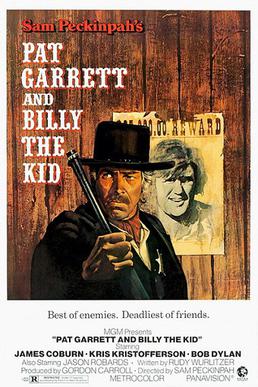
Pat Garrett and Billy the Kid (Photo credit: Wikipedia)
Flecks of disrespect toward people who profess to be Christians are found in some of Sam Peckinpah‘s movies (The Deadly Companions, Ride the High Country), and clearly Pat Garrett and Billy the Kid (1973) is no exception. (I’ll give Straw Dogs a pass; it’s different). But Christians need not be offended by Garrett: the entire film is unloved pig vomit, not to be taken seriously.
It is easy to mistake the picture for a Bob Dylan musical, with bad songs aplenty—Dylan wrote the, uh, score—but, no, it is of course a Western. This one, though, is not much enlivened by its scenes of violent action, gripping as these can be. When it isn’t ludicrous, the material is tired. The film is inert. . . As many as six film editors worked on it, with Peckinpah typically denied further control of the flick. If only screenwriter Rudy Wurlitzer had been denied any control of it.
by Dean | Nov 26, 2017 | General
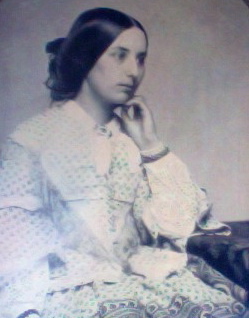
Ambrotype of Fanny Brawne taken circa 1850 (photograph on glass) (Photo credit: Wikipedia)
A nice scene in Bright Star (2009), by Jane Campion, has the poet John Keats (Ben Whishaw) choosing to knock on a wall behind which is the bedroom of Fanny Brawne (Abbie Cornish), who hears the knock. Then Fanny herself, drawn to Keats, knocks back, with no other response forthcoming. Shyly neither knocks again, or tries to communicate with words. This physical separation between the two will become forced and lengthy as time goes on. A love affair develops, and Keats implacably becomes everything to Fanny; but the couple is parted for long periods of time.
Fanny—the film is more about her than about Keats—is a proud, sometimes haughty dressmaker, who is usually even-tempered and who loves her mother and siblings. And she gets to love Keats against all odds—such as John’s illness and his skeptical best friend, Charles Armitage Brown—but, woefully, she cannot keep Keats. He travels to Italy for the sake of his health. His illness kills him. Critic Dana Stevens is right that “Campion captures the narrowness of most people’s social worlds [in the early 19th century],” and in her narrow social world Fanny suffers continually. Though beautiful, Bright Star is an utterly sad film about defeat. There is little light at the end; life here seems like a cheat. All the same, the film isn’t too gloomy.
In an earlier review of the work, I praised the performances of Cornish and Whishaw. They’re not the only ones, though, who convince as 19th century figures, for the instincts of Paul Schneider (as Brown) and Kerry Fox are also winningly sure. Cornish owns the part of Fanny, especially when she’s lost in anguish. Whishaw never takes a false step. The music by Mark Bradshaw is delicate, the cinematography by Greig Fraser is incisive.
by Dean | Nov 20, 2017 | General
We learn, I think, valuable things about nuclear power from Robert Stone‘s documentary, Pandora’s Promise (2013), which dutifully reveals people of science and environmentalist activism who have come to favor nuclear power as an energy source. We are told, for example, than nuke energy is even safer than solar power because the making of solar panels is a very toxic process. We are told how speedy France was in converting to nuke power and how well the “clean” stuff is working out for it. Writer-director Stone seems to believe that global warming is a threat to the human race (I myself doubt it), and so he never beats the drum for fossil fuels. Nuclear plants, however, release no carbon emissions—happy news.
There is nothing brilliant about Pandora’s Promise, and it could stand to be a little more analytical. It is involving and usually cogent, even so, and is never too hard on either Democrats or Republicans. The world is not listening to pro-nuclear messages, though.
by Dean | Nov 18, 2017 | General

What’s Up, Doc? (1972 film) (Photo credit: Wikipedia)
With his famous nostalgia for (truly) old movies, Peter Bogdanovich was right to make in the early ’70s a screwball comedy—What’s Up, Doc? (’72)—for he directed with a fine sense of pacing and a flair for sight gags. The flick is mere entertainment, but it stays unassuming—not always having funny lines, but sufficiently laugh-inducing nonetheless.
In her first movie role, Madeline Kahn plays the scolding fiancee of a musicologist (Ryan O’Neal) with amusing poise and impeccable timing. O’Neal is passable and occasionally more than that, and some of the other actors are invariably more than that. The woman Kahn vies with for O’Neal’s affections is, unfortunately, Barbra Streisand—the movie’s most important flaw. I suppose Streisand looks right for musicals, but she doesn’t look right at all for a Carole Lombard role in a romantic comedy. She is unglamorous and unfunny and hollow. She nearly wrecks the entire film.
But not quite. What’s Up, Doc? is still pleasurable, an inspired tribute to the screwball productions. Possibly it is the best Bogdanovich movie I’ve seen.
by Dean | Nov 16, 2017 | General
A new song by Taylor Swift is supposed to feature the line, “I only bought this dress so you could take it off.”
That’s rich. NO woman buys a dress for that reason. I think I’ll be better off avoiding a racy Taylor.
by Dean | Nov 14, 2017 | General

Cover via Amazon
The Warren Beatty movie, Reds (1981), is a grabber about the American pro-Communist journalist John Reed (Beatty) and his wife Louise Bryant (Diane Keaton). Often fascinating, it is also, alas, extremely faulty, and its biggest problem is the use of real-life elderly “witnesses” who yak about the John Reed they saw and knew about. Rebecca West, George Jessel and Will Durant among them, these people make observations that add nothing to the on-screen story, not least because they utter things the rest of us already know.
Beatty’s acting, though not memorable, is palatable. Keaton does her best to create a character, but some of what she has to do is plainly beyond her. Director Beatty—co-scenarist too—mostly wastes Jack Nicholson in the Eugene O’Neill role, and Paul Sorvino is sadly almost laughable.
Reds is sufficiently honest to affirm that the Russian Revolution did not liberate people; it oppressed them. It says, in addition, that political movements are (constantly) hindered or damaged by natural complexity and human variety, even, in fact, by going against nature (as Alfred Jay Nock knew). As it happens, Bolshevism, in its cruel determination, went not only against nature but also against people.
by Dean | Nov 12, 2017 | General

Publicity photo of Loretta Young for Argentinean Magazine. (Printed in USA) (Photo credit: Wikipedia)
Love is News (1937), directed by Tay Garnett, is another old Hollywood comedy about newspaper reporters, shown here to be a shabby lot. They lie. Tyrone Power, as a reporter, intends to lie about a well-known heiress he interviews enacted by Loretta Young; but Young turns the tables on him. She lies about him to a batch of reporters.
Handsome Power has comic verve but no charisma. Beautiful Young is not a natural for farce but, happily, is never false. As a managing editor, Don Ameche is a gratifying exhibitor of range. The film is lively without being very funny (to me) until it turns slapstick, beginning with Power deliberately dropping Young into a mud puddle. The ending is romantically jaunty. Love is News is a more-than-okay lark.
by Dean | Nov 8, 2017 | General

Cover of Deliverance (Deluxe Edition)
I have read James Dickey’s novel, Deliverance, but I don’t much remember it. I remember enjoying it, though, and I also enjoy the John Boorman film version of it (1972), whose screenplay Dickey wrote.*
Four middle-aged men head to the forest and take a canoe ride on a treacherous river. The rapids are bad enough; the men also encounter bullying hillbillies, one of whom they kill after he sodomizes Bobbie (Ned Beatty), a member of their group. Without contacting the police, they bury the man and then try to high tail it out of the region. They gradually fear, however, that a vengeful hillbilly is attempting to waste them with a shotgun.
I am perfectly sure the movie is a lesser work than the novel. How I see Boorman’s concoction is as a nicely shot, mostly realistically made adventure story which conveys a message about moral uncertainty and compromise being involved in physical survival. The canoe riders do not trust lawful authorities who might help them, and the mountain man whom Jon Voight‘s Ed shoots with a crossbow may or may not be a murderer. Another thing the film tells us is that packs of violent cretins like the hillbillies are out there. They may lie low, they may be hidden, but they’re there.
Most, though not all, of the acting in Deliverance is impressive. A fine thespian, Jon Voight is nevertheless a bit unsteady here, maybe because the script “does not offer him sufficient motivation and opportunity for emotional shading” (John Simon). Agreed. Even so, the film is anything but dull. It’s exciting and, in its own way, trenchant. And it’s a nature lover’s film. I firmly disagree with the critics who dismiss it.
*Rewritten by Boorman, apparently.
by Dean | Nov 6, 2017 | General
Rick, an adolescent, is determined to see his girlfriend Sheryl, whose mother is vigorously keeping the two apart. This is because, unbeknown to Rick, Sheryl is pregnant and was sent out of state. The boyfriend and his unruly buddies drive to the girl’s house and, owing to their aggressiveness, get involved in a physical conflict with the men of the neighborhood. This early ’60s incident is the axis for everything that takes place in the novel, That Night (1987), by Alice McDermott.
Such a book might seem like a yawner—material so familiar—but it isn’t. For one thing, it is short; for another, the characterization is engagingly strong; for another, the structure is interesting. Style? It’s nothing exceptional but it’s eminently effective. Closer to Fitzgerald than to Hemingway or Faulkner, thank goodness.
Themes in That Night include the insufficiency of love (for Rick and Sheryl, for Rick’s mother and father) and when there is trauma for the young. It reveals for us a person’s “blind, insistent longing”—Sheryl, forever apart from Rick, “wants to love someone else”—whether love is insufficient or not.
by Dean | Nov 5, 2017 | General
The 2017 Broadway production of the Noel Coward play, Present Laughter, has been filmed and was presented last Friday on the the PBS program, Great Performances. A flavorous item, it stars Kevin Kline as a hopelessly vain theater actor and womanizer who gets his comeuppance at the hands of adulators (ones he doesn’t understand). The cast is vibrant and commanding, with Kline of course the stand-out. Bhavesh Patel is unrestrained as Roland, but it must be remembered that his character is a possible madman. Tedra Millan (Daphne) is a droll tornado.